Artichoke
Proper name: Cynara scolymus
Family: Asteraceae
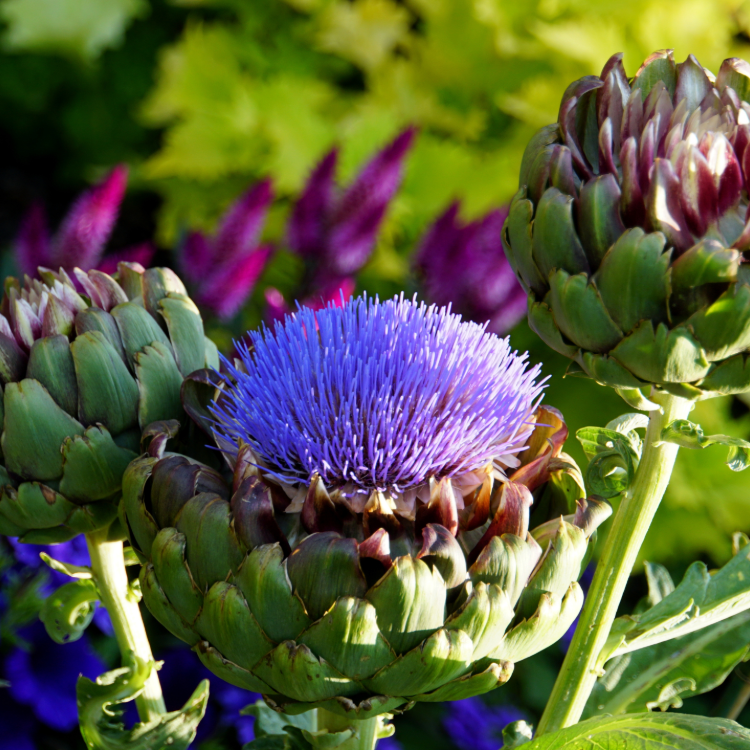
Artichoke is a bold, architectural food plant grown for its large, edible flower buds. In warm regions, artichoke is a long lived perennial that produces for several years. Its dramatic silver green foliage makes it as ornamental as it is productive, earning a place in both food gardens and edible landscapes.
AKAs (Also Known As)
Globe Artichoke – Most common culinary name
French Artichoke – Traditional European reference
Green Artichoke – Informal market name
Note: Globe artichoke is different from Jerusalem artichoke, which is a sunflower grown for tubers.
History
Artichokes originated in the Mediterranean region, where they were cultivated by the ancient Greeks and Romans. They were prized as a delicacy and associated with wealth and refined dining. Artichokes spread throughout Europe and later to the Americas, where they became especially popular in coastal regions with mild climates. Today, artichokes remain a celebrated crop in Mediterranean style cuisines and home gardens worldwide.
Plant Size
Artichoke plants are large and commanding.
Height: 3 to 5 feet
Width: 4 to 6 feet
Their deeply lobed leaves and thick stems create a striking garden presence.
Germination Time
Seeds germinate in 10 to 21 days. Many gardeners start artichokes indoors to get a head start, especially in cooler climates.
Time to Harvest
First year: Buds may form late in the season
Established plants: Heavy production in spring and early summer
Bud size and quality improve as plants mature.
Best Growing Zones
Artichokes grow best as perennials in USDA Zones 7 through 11. In cooler zones, they are often grown as annuals or overwintered with protection.
Light Requirements
Full sun preferred
Requires 6 to 8+ hours of direct sunlight daily
Tolerates light shade but produces fewer buds
Growing Methods
Soil: Yes, preferred
Hydroponic: No
Indoor: No
Outdoor: Yes
Container: Yes, large containers only (20+ gallons)
Growing Notes
Artichokes prefer rich, well drained soil and consistent moisture. Mulching helps regulate soil temperature and retain moisture. Buds should be harvested while still tight and firm. Allowing buds to flower produces stunning purple blooms that attract pollinators but ends edible harvest for that stem.
Similar and Related Plants
Cardoon (closely related, grown for stems)
Thistle relatives
Perennial leafy vegetables
Artichokes bring structure, longevity, and gourmet harvests to the food garden. For growers with space and patience, they reward season after season with both beauty and bold flavor.
